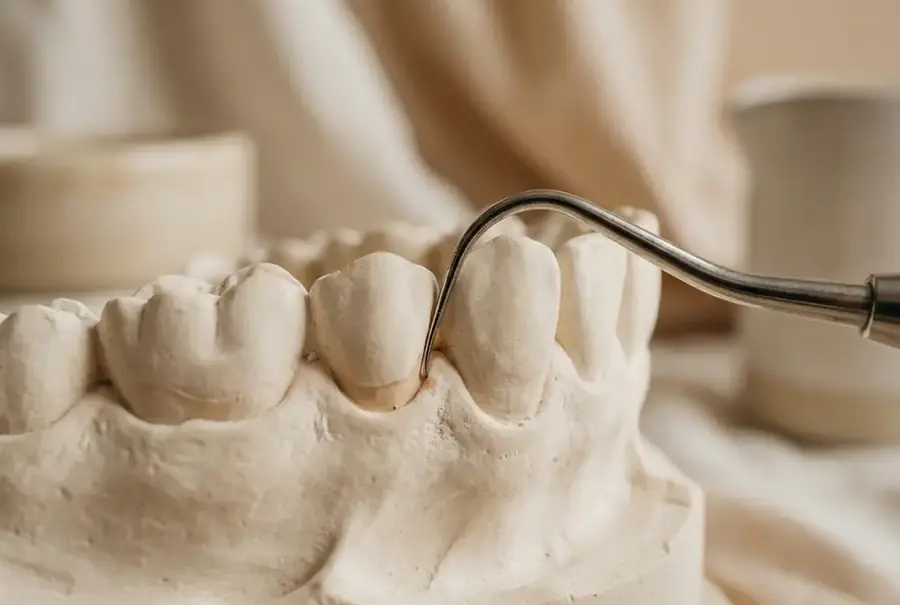
Forms of treatment for periodontal disease
Periodontal procedures fall into two groups: initial therapy and tissue regeneration.
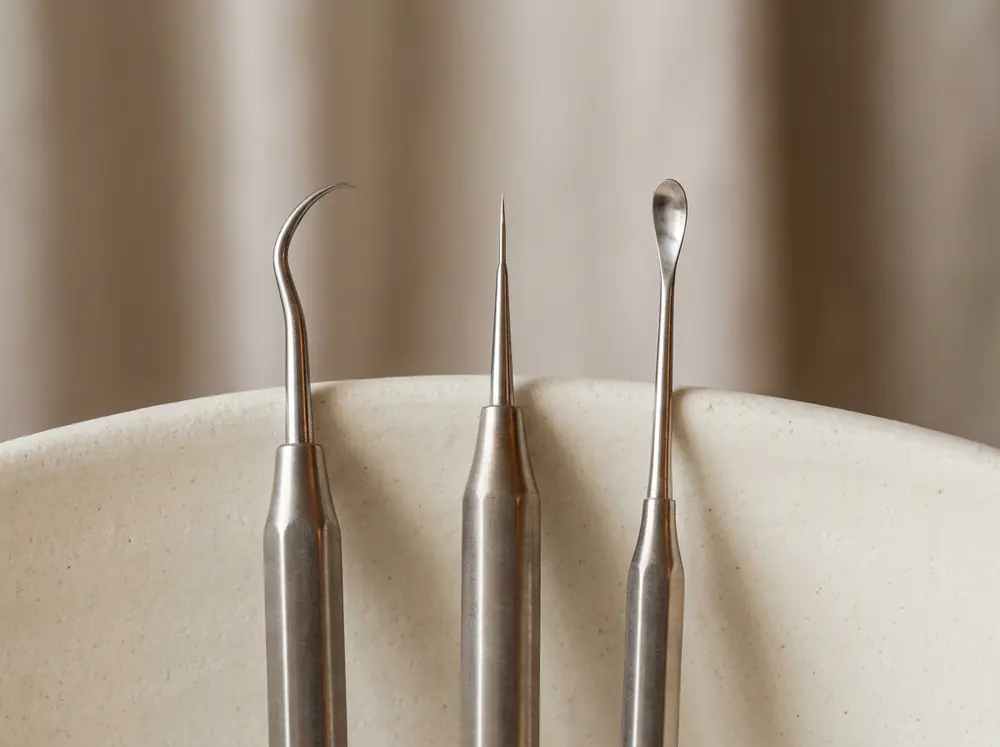
Once periodontal disease has set in, its progress can be halted in most cases. Modern methods work more gently than was possible only a few years ago.
Two routes
Initial therapy stops the disease. It removes the cause – the bacterial deposits in the gum pockets – and prevents further loss of gum and bone. Tissue already lost it recovers only to a limited degree.
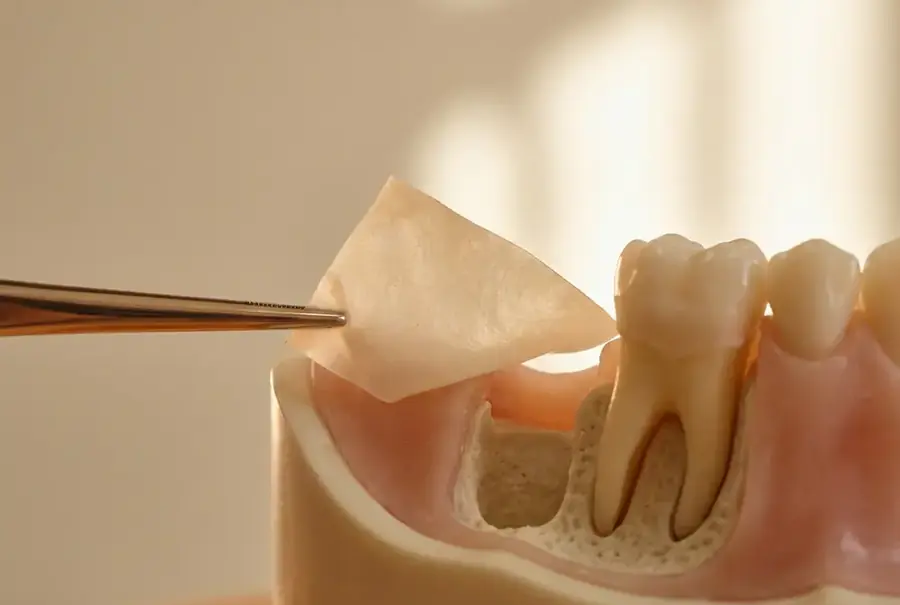
Tissue regeneration follows on from that. It seeks to rebuild lost tissue so that the tooth-supporting apparatus can do its job again.
The order cannot be reversed: without the inflammation having healed, any rebuilding has no prospect of lasting.
Periodontal therapy
The forms of treatment at a glance
Which form is used is decided by the findings – as a rule the steps build on one another.
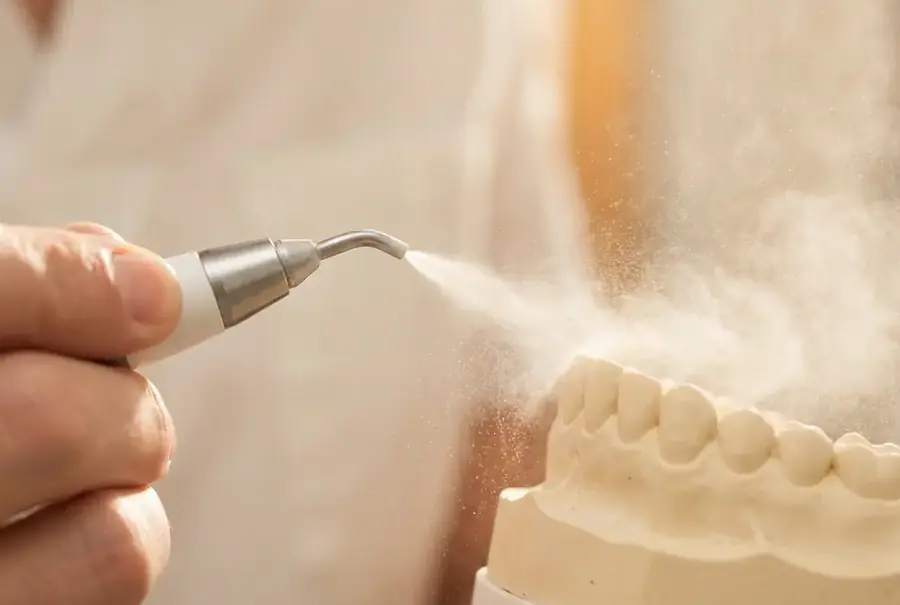
Powder jet devices
A fine jet of powder instead of a hand instrument, especially in aftercare.
More on thisAnswered briefly
Frequently asked questions
With pocket depths up to about five millimetres, as a rule yes. If deeper pockets remain afterwards, a surgical step is considered.
Usually not. The mechanical cleaning is the treatment; an antibiotic is added only in certain cases, for instance in rapidly progressing forms. It never replaces the cleaning.
In the closed approach the cleaning is done without an incision, guided by touch. In the open approach the gum is folded back so that the root can be cleaned under direct view and the bone assessed.